

Best Portable Power Stations: Real-World Picks I Actually Trust & Use
Updated August 2026: One of my first portable power stations was a BLUETTI EB70S that cost around $350. After a year, it stopped holding a charge. I’d plug it in overnight, the display would show 100%, but within 24 hours it would be dead.
That failure taught me the most important lesson about these units: battery quality determines whether you own a useful tool or an expensive paperweight.
I’ve since tested power stations that are no longer sold, including the Blackfire 500W I reviewed head-to-head with a Jackery, and I own several that are still running strong years later. Living in South Carolina through increasingly severe hurricane seasons, reliable backup power has shifted from nice camping gear to essential household equipment.
When the grid goes down for days with nine kids at home, being able to run refrigeration, power medical equipment, charge devices, and keep Starlink connected isn’t optional.
I currently own five power stations and have used dozens of others owned by friends who camp and prepare for storms the same way I do. Capacity tells you how long a unit can run your equipment. Continuous output tells you what it can actually power. Battery chemistry tells you how well it should hold up over years of use. Recharge speed matters too, but only when you have somewhere to recharge it.
Every power station on this list earned its place through real use, either mine or that of people I trust when storms hit. These are not rankings based on spec sheets or paid placements. To BLUETTI’s credit, its newer LiFePO4 models are completely different animals from my failed EB70S, and two of them made this list. Capacity and size depend on the job. Reliability doesn’t.
Here are the portable power stations that actually deliver when you need them.
Not All Power Stations Are in the Same Category
A battery bank keeps your phone alive. A small DC unit like the Anker SOLIX C200 keeps a family’s devices charged during a road trip. A 1,000Wh-class unit like the Jackery Explorer 1000 V2 or Anker C1000 Gen 2 can run a camp refrigerator for much of a day, power a CPAP for multiple nights, or keep essential electronics working during an outage.
A unit with more than 3,000Wh of capacity, like the GROWATT HELIOS, can support critical household loads during a longer outage.
Figure out what job you need it to perform before comparing a single specification.
How I Chose These Portable Power Stations
Every power station on this list earned its place through real-world use, not spec-sheet comparisons or paid placements. Some of these units I personally own and rely on.
Others belong to close friends who camp and prepare the same way I do, and I’ve used them extensively during trips, outages, and storm season.
My selection criteria was simple:
- Real use over marketing – Units had to perform reliably during camping trips, extended outages, or emergencies.
- Battery quality first – LiFePO4 battery chemistry was prioritized for long-term reliability and cycle life.
- Honest power delivery – Continuous output mattered more than inflated surge ratings.
- Proven brands – I focused on manufacturers with a real track record, not flashy hardware.
- No paid rankings – This list isn’t sponsored, and placement isn’t for sale.
If a power station didn’t hold up when it actually mattered or came from a brand I wouldn’t trust long-term, it didn’t make the cut.
Best Portable Power Station for Most People
The Anker SOLIX C1000 Gen 2 is the portable power station I would recommend to most buyers. Its 1,024Wh capacity is large enough for refrigerators, Starlink, CPAP machines, camping equipment, and essential electronics without pushing the unit into the oversized home-backup category. The 2,000W continuous output handles more demanding appliances than most competing units of this size, while its LiFePO4 battery, manageable weight, and 49-minute recharge time make it practical for both storm preparation and regular camping.
Anker SOLIX C1000 GEN 2
Best Overall for Most People
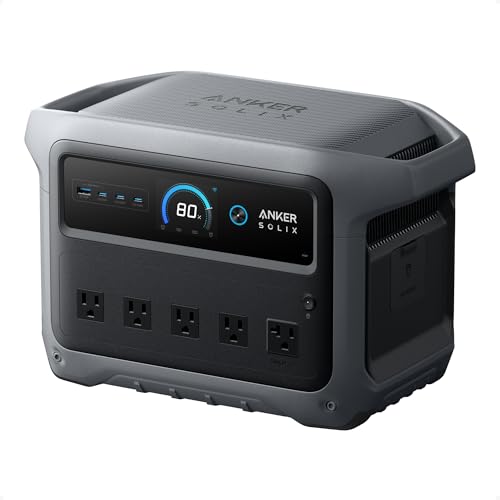
- 49 Min UltraFast Recharging: With upgraded HyperFlash tech, fully recharge at 1,600W—for outage prepping, camping trips, or tailgating events. Enable it in the Anker app.
I ran an older SOLIX unit for years before this one, and the C1000 Gen 2 is the upgrade I’d been waiting for. At 1024Wh with LiFePO4 batteries rated for 4,000 cycles, build quality is immediately noticeable the second you pick it up.
The 2000W continuous output, 3000W peak, covers what you actually run through a power station, Starlink, camp lights, laptops, with real headroom left over. Recharge is the biggest jump from my old unit: HyperFlash tech hits a full charge in 49 minutes with UltraFast enabled, a claim independent testing backed up and slightly beat.
Two numbers worth knowing, pulled from independent testing rather than my own measurement: efficiency lands around 86%, and idle draw sits at about 13.8W. That sounds small, but left running continuously for three days, that draw alone could drain the battery. Shut the inverter off when you’re not using it, especially during a multi-day outage.
UPS switchover is under 10ms, so a CPAP or laptop won’t notice the flip. One buying note worth knowing before you shop around: Anker also sells a nearly identical C1000X through big-box retailers with one fewer outlet and a different screen for the same price. Skip it and buy the standard C1000 Gen 2 online instead.
Why I Picked It: Premium build quality, genuine 2000W continuous output, and long-term reliability for serious off-grid use.
The C1000 Gen 2 is my best overall recommendation, but it is more power station than many families need for charging phones, tablets and laptops. If your primary concern is keeping USB devices alive in a vehicle or at camp, the much smaller C200 DC makes more sense.
Anker SOLIX C200
Best for Phones, Tablets and Road Trips
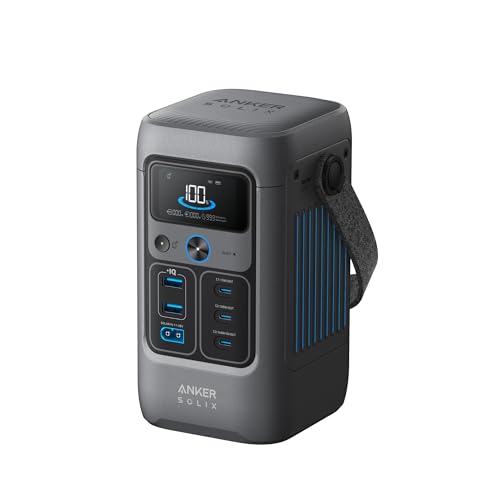
- 𝗛𝗼𝘄 𝘁𝗼 𝗥𝗲𝗰𝗵𝗮𝗿𝗴𝗲 𝗬𝗼𝘂𝗿 𝗖𝟮𝟬𝟬 𝗗𝗖: Recharge with a 9V/2A, 18W or higher USB-C wall charger, such as an Anker USB-C charger or laptop charger. Note that only the and USB-C3 ports can be used.
I picked this up in November 2025 after realizing our Chevy Express 3500 van has zero outlets for anyone in the back seats. With nine kids and a lot of road trips, dying devices six hours into a drive isn’t a minor annoyance, it’s a full mutiny.
At 192Wh and roughly 4 pounds, the C200 isn’t trying to be a power station in the traditional sense. Anker stripped out the AC inverter entirely, so there are no wall plugs, just three USB-C ports (one at 140W) and two USB-A.
That sounds like a limitation until you realize almost everything a family actually carries now, phones, tablets, Switches, MacBooks, camera batteries, is already USB-C. Skipping the AC inverter reduces conversion losses, eliminates inverter fan noise, and makes better use of its relatively small battery when charging USB devices.
It’s been living in the van since I bought it. We’ve had four devices charging at once, two phones, an iPad, a Nintendo Switch, and still had 70% left hours later. It also takes a fast charge itself, up to 140W in, so topping it off from a car charger or a small solar panel at camp is quick.
The one real miss: no 12V cigarette lighter socket, which is odd on a dedicated DC unit and rules out running a car fridge or tire inflator off it. Not a dealbreaker for how we use it, but worth knowing before you buy.
Why I Picked It: This isn’t a replacement for a real power station, it’s a lighter, cheaper category built specifically for keeping USB-C devices alive on the road. For that job, nothing else in this guide comes close.
Jackery Explorer 1000 V2
Best For: Family car camping, CPAP use, multi-day trips, reliable storm backup

- Powerful yet Compact: Boasting a 1,500W AC output and a 3,000W surge peak, the Solar Generator 1000 V2 can power multiple appliances, including AC units, fridges, and electric pots. With a 1,070Wh capacity and a lightweight build of only 23.8 lbs, along with a foldable handle, it makes an excellent companion for outdoor camping, road trips, or emergencies.
I ran the original Explorer 1000 for three years before it started losing capacity, standard lithium-ion doing what standard lithium-ion does. When Jackery moved this line to LiFePO4 with the V2, I upgraded, and it fixed the one real complaint I had with the old unit.
Same use case as before: nine kids, a van full of gear, and a power station that has to carry the load on every camping trip. The V2 holds 1070Wh and puts out 1500W continuous with a 3000W surge, enough to run our camp fridge, my wife’s CPAP for multiple nights, and the electric griddle for the whole crew without babysitting it.
The battery is the real upgrade. Jackery rates the LiFePO4 battery for 4,000 cycles before falling below 70% of its original capacity. That doesn’t guarantee the entire unit will last a decade, but it should hold its usable capacity substantially longer than my original lithium-ion Explorer 1000, which was already showing real degradation by year three.
Charging is faster too. Standard charge takes 1.7 hours, but flip on emergency charging in the Jackery app and you get 0 to 100% in one hour flat, useful when a storm’s coming and you didn’t top it off the night before.
At 23.8 pounds it’s lighter than the old V1 despite the bigger battery, still too heavy for backpacking but an easy lift into the van. One limitation worth knowing: it only accepts Jackery-branded solar panels for solar charging, so factor that in if you’re building an off-grid setup around it.
Why I Picked It: After years with the V1, this is the upgrade I wanted most: the same practical size and reliable power delivery with LiFePO4 chemistry that should retain its usable capacity substantially longer.
Pecron E1500LFP
Best For: Maximum capacity per dollar, whole-home essentials, budget-conscious buyers who still want LiFePO4
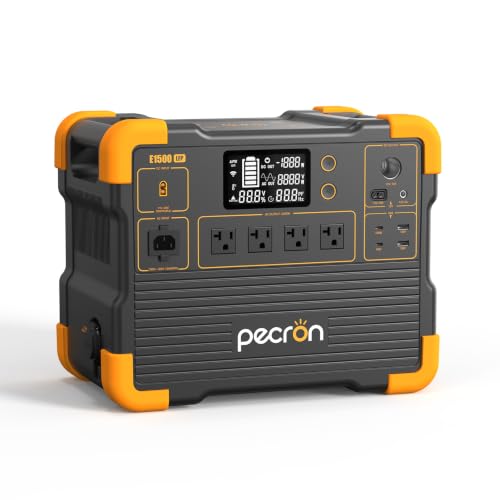
- FAST CHARGING: Up to 1400W AC Charging for an 80% charge in a speedy 0.9 hour, fully charged in 1.8 Hours. With solar panels charging, MAX 1000W solar input, fully charged in 2.5 hours.
- POWER IT ALL: The E1500LFP portable power station has 12 output ports that can run up to 12 devices at a time, such as 4x2200W AC outlets, 4xUSB ports up to PD 100W, 1xXT60-F Output(12V/30A), 1xCigar port, 1xDC5525 port, etc, compatible with virtually all essential devices.
I own this one, and it’s earned its spot through actual real-world use, not just a spec sheet. The E1500LFP is a 1536Wh LiFePO4 unit with a 2200W continuous inverter, and it’s become one of the tools I reach for the most outside of camping trips.
I brought it to a charity event where a group of us were demoing an old shed well away from any real power source. This thing kept our drill and saw batteries topped off all day, no generator noise, no gas fumes, no extension cords across a job site, just quiet, steady power exactly where we needed it.
It’s also made regular trips out to a friend’s off-grid shelter, where it’s become part of what makes those camping trips actually enjoyable instead of just tolerable, keeping phones charged and a light running at night without a second thought.
Independent testing on this unit backs up what I’ve felt in daily use: strong efficiency at both light and heavy loads, a UPS switchover that’s instant with zero flicker, and solar auto-start that just works the moment the sun hits the panel, no unplugging and reconnecting required.
The app covers the basics, state-of-charge monitoring, output control, display brightness, and the option to disable auto-shutoff for UPS use. It’s not as polished as Anker’s or DJI’s app, but it’s functional, and I haven’t run into any real issues day to day.
At around $550 with a 2+3 year warranty, this is one of the best dollar-per-watt-hour values in LiFePO4 right now. Pecron doesn’t have Anker or BLUETTI’s brand history, but between what I’ve put it through and what independent testing backs up, the hardware earns the price.
Why I Picked It: Quiet, reliable power for job sites without outlets and camping trips off the grid, this is the value pick that’s proven itself in the situations that actually matter.
DJI Power 1000 V2
Best For: Fast recharging, quiet operation, tech-heavy setups, drone users

- Power More Than Ever – DJI Power 1000 V2 is a high-capacity solar generator that powers 99% [11] of appliances like kettles, cookers, projectors, saws, and drills—ideal for camping, DIY, and outdoor work.
One of my best family camping friends runs the DJI Power 1000 V2, and I’ve used it on several camping trips with him. At 1024Wh with LiFePO4 batteries, it has the longevity I look for, but the standout is the inverter: 2600W continuous output, well above what you’d expect from a unit this size, and enough to run power tools or an AC unit’s compressor kick without flinching.
Charging is just as strong. It hits 80% in 37 minutes and a full charge in 56, fast enough to save a trip when you forget to plug in the night before. UPS switchover is rated at 10ms, so a CPAP or laptop won’t blink during an outage.
The SDC port is unique to DJI and charges their drones incredibly fast, which is why he bought it. But I’ve been more impressed by how quietly it runs, as low as 26dB, and how accurate the display is about remaining runtime.
During a two-day camping trip, we used it intermittently for Starlink, several laptops, camp lights, and a portable refrigerator. It didn’t run all of them continuously, but it handled the changing loads without a problem. Build quality feels premium, nothing creaks or flexes, and the four AC outlets are spaced well enough that large plugs don’t block each other.
Why I Picked It: If you want serious continuous output, fast charging, and whisper-quiet operation wrapped in DJI’s build quality, this is worth the premium price.
BLUETTI AC180
Best For: High-wattage loads, power tools, extended outages, heavy-duty backup

- [Charged in 1 Hour] – The AC180 packs a 1152Wh LiFePO4 battery, which can be fully charged in just 1 hour at 1440W AC input – always ready to go when you need it.

After my first BLUETTI died at 14 months, I swore off the brand. But the AC180 brought me back, and it’s been worth it. This uses LiFePO4 batteries rated for 3,500-plus cycles, completely different chemistry from my failed unit.
At 1152Wh and 35.6 pounds, it’s serious hardware for serious power needs. The 1800W output means I can run power tools, a microwave, or keep multiple devices charged during extended outages.
I’ve had this for two years now and it’s performed flawlessly through multiple hurricane scares, countless camping trips, and regular use. After two years, I haven’t noticed any meaningful reduction in runtime or performance.
The AC180 can handle heavy loads that would shut down smaller units. I’ve run our full-size blender, charged power tool batteries, and kept our internet setup running during a 3-day power outage without breaking a sweat. Yes, it’s heavy, but that’s the trade-off for this much reliable power.
Why I Picked It: When you need serious wattage and bulletproof reliability during extended outages or off-grid camping, this delivers professional-grade performance.
EcoFlow DELTA 2
Best For: Rapid recharge times, expandable systems, flexible camping and home backup

- 7 X Faster Charging. 0-80% in just 50 mins and 0-100% in 80 mins with AC input. That’s ideal when you need home backup power and a quick charge using your wall outlet.
Another friend in our camping group has run the DELTA 2 for over a year, and it’s been bulletproof. At 1024Wh with LiFePO4 batteries, it matches competitors on paper, but EcoFlow’s X-Stream fast charging (80% in 50 minutes) is legitimately game-changing.
We’ve shown up at campsites, realized the power station wasn’t charged, and had it ready to go before we finished setting up tents.
What makes the DELTA 2 special is expandability—you can add extra batteries to reach 3kWh total capacity. My friend hasn’t added batteries yet, but knowing the option exists makes this future-proof.
The 1800W AC output handles everything we throw at it, and the app control is actually useful (unlike some competitors where the app feels tacked on). Multiple USB-C ports mean everyone can fast-charge their devices simultaneously.
Why I Picked It: When you want blazing-fast recharge times and the option to expand capacity later, EcoFlow’s engineering delivers impressive performance.
BLUETTI Elite 100 V2
Best For: Portable LiFePO4 power, weekend camping, daily-use backup without excess weight
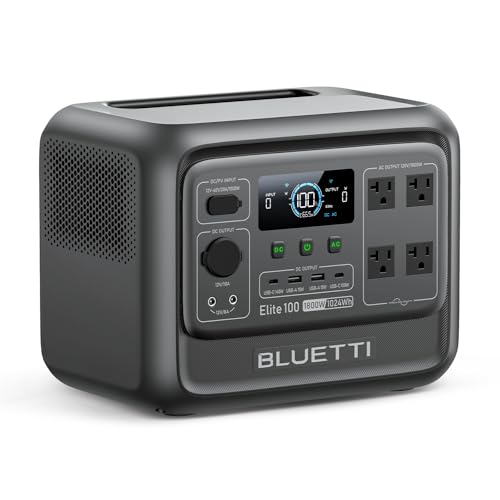
- [1800W Power for Everyday Essentials] – BLUETTI Elite 100 V2 features a 1024Wh capacity and 1800W rated AC output (2700W Power Lifting), easily powering up to 90% of everyday appliances. With 11 ports, it can charge multiple devices simultaneously—perfect for camping, emergencies, and home backup.
At 1024Wh and only 25 pounds, the Elite 100 V2 hits a sweet spot between small USB-focused units like my Anker C200 and the heavier AC180. A camping buddy swears by this for weekend trips where he wants serious capacity without the bulk.
The 1800W continuous output (2700W with Power Lifting mode) handles most camping and emergency needs. The LiFePO4 battery is rated for more than 4,000 cycles before falling to 80% of its original capacity, giving it substantially better long-term prospects than older lithium-ion units.
What’s impressed me watching him use it is the build quality. At 35% smaller and 30% lighter than the previous generation, BLUETTI clearly focused on portability without cutting into output. The handle design is comfortable, the display is easy to read in bright sunlight, and in silent mode it runs at just 30dB, quieter than his old AC180 under the same load.
Charging is fast too. TurboBoost AC charging or 1000W solar input gets a full charge in about 70 minutes, and the 10ms UPS switchover keeps his router and PC running through short outages without a reboot.
Multiple 100W USB-C PD ports make it great for charging laptops and tablets fast. The wireless charging pad on top is convenient for phones without fumbling for cables.
Why I Picked It: When you want premium BLUETTI quality in a more portable package, this delivers serious capacity without the serious weight.
GROWATT HELIOS 3600W
Best For: Critical household loads, multi-day outages, hurricane preparedness, and expandable backup systems
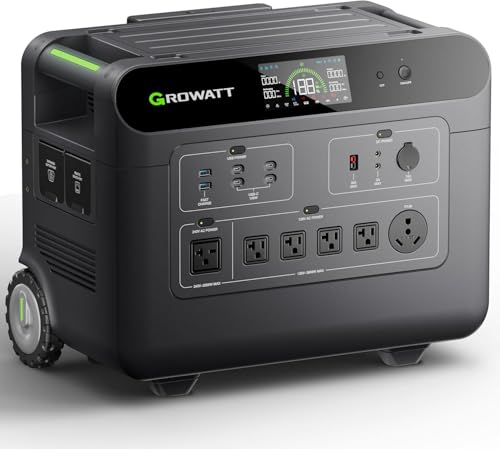
- 【Emergency Electric Generator with Extended Runtime】3600W output and 3600Wh (3.6kWh) LFP battery, providing up to 15 hours of power for daily home devices (routers, lights) and 1-3 days of emergency power for fridges. Backed by Growatt’s professional inverter technology, it delivers stable power, making it the perfect backup generator for home use and power outages, ensuring reliability when you need it most.
This is overkill for camping, but for hurricane season in South Carolina, units like this are becoming essential. At 3,686Wh actual capacity, marketed as 3600Wh, and 3600W continuous output, the HELIOS can run your critical home systems during extended outages.
I’ve seen this in action at a friend’s house during our last storm. It powered their refrigerator, internet setup, fans, lights, and medical equipment for over 24 hours on a single charge.
The LiFePO4 batteries are rated for 3,500 cycles, and at this price point and weight (it’s 88 pounds), you’re making a serious long-term investment. The unit supports solar panel input up to 2000W, and with sufficient solar capacity and careful load management, it can support much longer off-grid use than a conventional 1,000Wh station.
It’s also expandable up to 36kWh with additional battery packs, which is where Growatt’s whole-home marketing actually comes from. With expansion batteries and the appropriate electrical setup, this can become part of a much larger home-backup system, but as a standalone unit, it’s built for critical loads, not running an entire house indefinitely.
It’s too heavy and expensive for casual camping, but for serious emergency preparedness or running a remote work setup during outages, this is professional-grade equipment.
Why I Picked It: When you need substantially more backup capacity for refrigerators, internet, fans, lighting, medical equipment, and other critical household loads, this is serious insurance.
My Real-World Buyer Guide to Portable Power Stations
After owning and using portable power stations for years, through camping trips, storm season, and real power outages, I’ve learned most buying advice focuses on the wrong things. Here’s what actually matters.
Know Which Category You Need
A battery bank keeps your phone alive. A small DC unit like the SOLIX C200 DC keeps a family’s devices charged on a road trip. Because it skips the AC inverter entirely, it’s built for USB and 12V devices rather than household appliances, which is exactly why it works so well for phones, tablets, and cameras in our van. A 1,000Wh-class unit like the Jackery Explorer 1000 or Anker C1000 runs a fridge or CPAP for a weekend. A 3,000Wh+ unit like the GROWATT HELIOS is home backup for a multi-day outage. Figure out the job before you compare specs.
Size It to Real Devices, Not Round Numbers
Runtime equals battery capacity times real-world efficiency, divided by device wattage. A power station doesn’t deliver its full rated capacity at the outlet. During my own discharge testing of the Pecron E1500LFP through its AC outlets, I measured approximately 82% usable capacity with a light 200W load and approximately 96% with a heavier 1,400W load, running each test from full charge down to shutdown and logging the watt-hours delivered. The lesson: usable capacity changes with the load and the efficiency of the inverter, so plan conservatively.
My 45W camp refrigerator has run for roughly 18-20 hours on my Jackery Explorer 1000 in real use, though that doesn’t mean it draws 45W continuously. Temperature, thermostat setting, and how often you open the door all affect it. Starlink commonly pulls around 50-75W once running, so a 1,000Wh unit can realistically keep it online for roughly 12-18 hours if it’s not sharing the load with anything else. A laptop or box fan is a manageable draw for a few hours, but either can eat substantial capacity if left running all day or overnight.
Chemistry Determines Lifespan, Not Tonight’s Runtime
LiFePO4 batteries generally hold up far longer than conventional lithium-ion, often rated for 3,000-4,000 cycles before falling to a specified percentage of original capacity. That doesn’t guarantee the whole unit lasts a decade, inverters, screens, and control boards can fail independently of the battery, but it substantially improves the odds the battery itself stays useful over years of ownership. A 200Wh LiFePO4 unit still won’t run your fridge overnight. Size for capacity first, then insist on LiFePO4 for anything you’re keeping long-term.
Fast Recharge Matters Before the Storm, Not During It
A quick recharge is genuinely useful for topping off before a storm hits or catching a short window between campsites. But three days into a real outage with no grid power, recharge speed stops mattering. Capacity on hand and solar input do.
Don’t Confuse Surge With Continuous Output
Surge capacity matters when a refrigerator, compressor, pump, or power tool first starts, but it only tells you what a unit can handle briefly. Continuous output tells you what it sustains hour after hour. Make sure the continuous output can handle your intended equipment before you get distracted by port counts or inflated surge claims.
Weight and Brand Trust Are Trade-Offs, Not Guarantees
Lighter units get used more; heavier units usually mean bigger batteries and better cooling. Decide first whether this unit will be carried by hand, ride in a van, sit at a campsite, or stay in the garage for hurricane season. And no chemistry protects you from a bad inverter or a dead screen. I haven’t seen meaningful runtime loss on the units I’ve owned longest, but I haven’t run controlled tests on all of them, so I won’t call anything here buy-it-for-life. These are just the brands that have earned repeat purchases from actual use.
What Actually Matters
Know what you’re actually trying to power, size your capacity around real devices instead of round numbers, choose LiFePO4 for anything you plan to keep long-term, and you’ll be better prepared for whatever the next storm or road trip throws your way.
If there’s one takeaway from this guide, it’s this: buy quality once, stick with proven brands, and choose battery technology that’s built to last.

Blair Witkowski is an avid watch nut, loves pocket knives and flashlights, and when he is not trying to be a good dad to his nine kids, you will find him running or posting pics on Instagram. Besides writing articles for Tech Writer EDC he is also the founder of Lowcountry Style & Living. In addition to writing, he is focused on improving his client’s websites for his other passion, Search Engine Optimization. His wife Jennifer and he live in coastal South Carolina.


